
Sabtu, 26 Februari 2011
Asus Republic of Gamers Gaming Laptop G73JW

Alienware Area 51

HP ZR30W The Largest Resolution Monitor

;( ;( ;( *hiks hiks*
ATI RADEON HD 6950
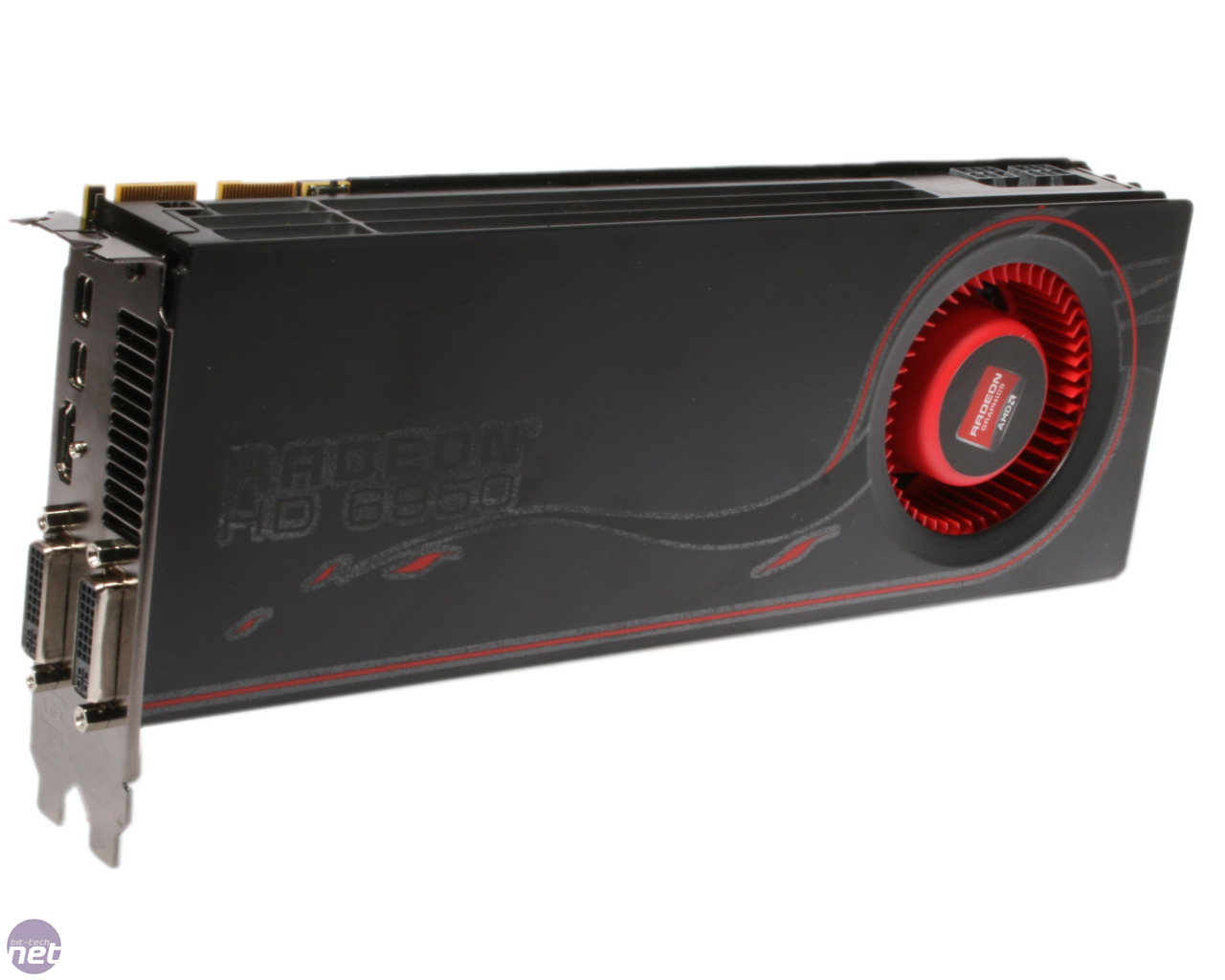
ATI RADEON HD 6950 is a VGA that you can play in 6 monitors. But still this VGA performance can't defeat Nvidia GeForce GTX 580 in the speed and bit. But this VGA is the answer for people who wants to have a great performance with a not an expensive price. This VGA cost 3,4 million rupiah for 2 GB Vram VGA unbelieveable. I know some people might thinks this VGA is expensive but dude 2 GB Vram 3,5 million rupiah thats incredible. But thank god is not as expensive as Nvidia GeForce which the VGA ram doesn't reach 2 GB. Lets talk about the specification of this VGA. The Vram of this VGA is 2 GB GDDR 5. Maybe if you use this VGA you can play Crysis 2 in a high video setting. Maybe the FPS rate might reach 15 until 25 (I Think). My computer at my home uses ATI RADEON HD 5850 Black Edition I run on Crysis 2 in high video setting. The rate of the FPS reach 10 until 20. The frequency of this VGA is 1,050MHz (4.2GHz effective). And the bit of this VGA is 256-bit PS:The bit doesn't beat Nvidia GeForce. So if you are searching a low price but powerful VGA ATI RADEON HD 6950 is the answer.
Jumat, 25 Februari 2011
Racing Games Like The Sims
Do you want to play racing game that you create your own avatar, buy new house, wash your car, customize your car and buy your own yacht. I've just got the answer! The name of the game is................. Test Drive Unlimited 2!

The original Test Drive Unlimited could very well be viewed as an elaborate experiment, laying down some core values that paved the way for the bigger, bolder sequel. It was clear right from the off that Eden Games was onto a winning formula with Test Drive Unlimited and that it simply had to polish the idea and bolster it with more depth.
In Test Drive Unlimited 2, the studio has done just that; opening up the racing-MMO concept to a wider audience while delivering immeasurable substance at the same time. However, as a great deal of time has passed since the last instalment broke cover in 2006, we’ve since seen both Need For Speed and Burnout break into the socially integrated, open-world format with great success. Escaping from the shadow of these juggernaut brands will stand as proof of Test Drive’s staying power.
From the opening title screen crawl, Test Drive Unlimited 2’s party vibe kicks in with gusto, as we see a poolside rave party in full swing. After choosing one of the revellers as the game’s main protagonist, the player’s partner throws them the keys to their shiny new birthday present: a souped-up Ferrari, fresh from the factory. Barrelling out of the garage and into the streets of Ibiza is an instant joy, as the lush scenery passes by in a flash and the pounding dance soundtrack thumps over the loudspeakers.
It’s almost too good to be true, and in what seems to be something of a running gag in the racing genre, all the splendour is suddenly taken away as yes, the character was indeed dreaming the whole scene. It’s a massive tease, but serves as something of a shiny carrot dangling in front of the player to pursue.
What follows is a rags to riches story that sees your penniless chump rising to the top of the socialite ladder, mingling with some truly reprehensible ‘it’ girls and rich kids, while trying to earn their rightful spot as the best driver in the professional circuit. Greatness can be achieved through many means, as players are given absolute freedom on how they journey through the core plot line and expand their car collection.
Free Roam is the best way to become accustomed to the delights that the massive sprawl of Ibiza holds, and most importantly to discover new points of interest such as car showrooms, clothes shops, real estate and side-quests. There is also a level cap of 60, which is spread across four sub-categories: Collection, Social, Competition and Discovery. The latter fills with every new stretch of road the player drives down, which means as long as uncharted roads are being driven and new shops are uncovered, the player continuously receives experience.This is why Test Drive Unlimited 2 succeeds. The constant rewards and feedback given to the player can turn what was supposed to be a quick hour’s worth of play into a massive gaming session. Collection is the same, rewarding the players each time they buy a new piece of admittedly naff-looking clothing, don a new haircut or, amazingly, go under the knife at the plastic surgeon. Vanity and the pursuit of perfection is a core theme running through this game, and at times the stuck-up, embarrassingly stand-offish nature of the supporting cast can be difficult to stomach, but this is a matter of taste of course.
Competition is the main source of level progression and cash that starts with earning licences in each available racing discipline. ‘Asphalt’ events favour grip racing and the constant threat of both environmental obstacles and traffic, while ‘Off-Road’ championships allow more room for drifting, although tracks are unpredictably uneven and dangerous. The final class is ‘Classic’, throwing a wide range of cars into the mix that are incredibly difficult to tame.
Championships in each class are split into several varied sub-events including checkpoint sprints, circuit races and speed challenges that task players with maintaining a minimum speed for as long as possible.
Car handling in Test Drive Unlimited 2 is very much its own beast. Not quite a fully fledged simulation, there is no room for reckless arcade drifting here, unless last place sounds like an attractive prospect. Instead, this is a driving mechanic that requires real discipline, a keen eye and a strict racing line at all times. Opponent AI can be needlessly brutal at times, but after a gruelling few first events, it all starts to become second nature. Perhaps the best feature of the driving mechanic is the distinct lack of rubber-banding, thus players can leave the pack trailing indefinitely if they’re fast enough.
However, Free Roam mode does throw some arcade sensibilities back into the mix, specifically the new F.R.I.M system that pays out whenever players pull off a jump, wheelspin or near miss. Once one of the three criteria is met, the F.R.I.M meter activates and players can choose to keep a combo chain going, or bank at regular intervals. If the player crashes, they lose all of the money they haven’t banked, making for a great way to make cash mid-event, and one hell of a risk-reward system.
Money is worthless with nothing to spend it on, which is where the game’s many licensed showrooms come into play. Walking around in first person and examining every nook and cranny of stellar sports cars is a joy, as is walking around the player’s own garage and eyeing up their personal collection. There’s a real sense of ownership here that’s rarely found in the racing genre.
Players can flaunt their spoils online against other players driving around Ibiza, or the secondary yet equally as massive location Hawaii. Using either the GPS menu or by flashing their car’s headlights at opponents, players can dive right into any of the game’s single or multiplayer-specific races, as well as invite other players over to their swanky home for a party.
This brings us neatly to the fourth and final levelling up category; Social, which, although it is a key element of Test Drive Unlimited 2, never feels forced upon the player. We’d highly recommend giving it a proper play through however, as players can create racing clubs, carve out their own legacy and take the fight to others online.Although it’s been billed as a racing MMO title, we reckon that the term may paint quite a false picture of what to expect when jumping into Test Drive Unlimited 2’s online modes. There is no intense stat-crunching or crushing, but rewarding grind that you might find in role-playing MMOs. Instead, you will find the racing havens of Ibiza and Hawaii teeming with favouring quick instance challenges, slick clan battles and the pursuit of leaderboard domination. It’s fast, fluid and entirely accessible.
Setting up these quick events is simple; simply pick a starting point from the list of challenges you’ve discovered and gun it to the finish line. Wagers can be placed on races if you’re feeling particularly cocksure, or competitors can just race for the sheer hell of it. When driving across each map while either playing solo or as part of an instance race, you can discover new starting points for additional multiplayer challenges, or if you’re feeling a little bit more creative, bespoke challenges can be created at any one of the map’s community centres.
These centres need to be discovered as well, and can serve as meeting hubs for player-avatars to chat and organise routes across the island. By walking up to the bar, you can choose to attempt created challenges created by the community – giving you the potential to earn a wedge of cash in the process – or craft instances of your own. Challenges can only be active anywhere from a day up to a week before they disappear, and if you happen to log the best time on a specific challenge, you’re looking at some serious cash rewards.
While you can only create one of three challenge types; circuit, sprint and Speed Trap, the entirety of both Ibiza and Hawaii is your playground to create as many custom events as you like. Again, it’s as easy as picking a start and finish point, or in the case of Speed Trap, placing speed cameras around the roads and designating a target speed. After test driving the event to ensure your criteria are realistic, you can then post your instance to the community boards and the mercy of racers everywhere. Other racers can also rate your challenge if they feel it’s viable enough.
There is only one gripe that stands out here, and that is the transition to the GPS map overview and gameplay. You can zoom out to view the map of each island and the location of online racers. If you spot someone you want to challenge, you can highlight them and, provided you’ve already explored the stretch of road they’re on, jump right onto their location. The fatal flaw is that the transition from over-world view to the road takes a few seconds longer than we would have liked, meaning your chosen target player will likely be long gone by the time you get back behind the wheel of your car.
While this is a highly polished effort from the studio, delivering confidently 50-plus hours of exemplary racing finesse, fans captivated by Need For Speed: Hot Pursuit’s arcade allure may find Eden Games’ simulation effort laboured by comparison. For racing fans that aren’t so picky, Test Drive Unlimited 2 comes highly recommended on sheer value and playability.
Minimum System Requirement: (For PC)
•Operating System: Windows XP SP2, Vista SP2, Windows 7
•Processor: Intel Core 2 Duo 2.2GHz or AMD Athlon X2 4400+
•RAM: 2GB
•Video: Nvidia GeForce 8800 / ATI Radeon HD 3870
•Sound: DirectX 9.0c-compatible
•Hard Disk: 14 GB
•Peripherals: 10-button controller such as Xbox 360 or Logitech Dual-Action
•Other: Internet Broadband Connection, Microsoft .NET 3.5 required
Trailer:

Review
There’s always an element of danger surrounding projects that defy genre classification. No matter how wildly radical a developer’s idea may sound on paper, the core mechanics at hand may fall apart once they’re all brought together as a complete package. Test Drive Unlimited fit snugly into this trend, with developer Eden Games placed a diluted MMO spin on the racing format.
The end result was enjoyable enough but ultimately the marriage of racing and role-playing resulted in something of a stalemate. The racing was fun, although it sat on a blurred line between simulation and arcade, while the RPG tenets simply weren’t engrossing enough to appease fans of stat crunching and rewarding progression.
The original Test Drive Unlimited could very well be viewed as an elaborate experiment, laying down some core values that paved the way for the bigger, bolder sequel. It was clear right from the off that Eden Games was onto a winning formula with Test Drive Unlimited and that it simply had to polish the idea and bolster it with more depth.
In Test Drive Unlimited 2, the studio has done just that; opening up the racing-MMO concept to a wider audience while delivering immeasurable substance at the same time. However, as a great deal of time has passed since the last instalment broke cover in 2006, we’ve since seen both Need For Speed and Burnout break into the socially integrated, open-world format with great success. Escaping from the shadow of these juggernaut brands will stand as proof of Test Drive’s staying power.
From the opening title screen crawl, Test Drive Unlimited 2’s party vibe kicks in with gusto, as we see a poolside rave party in full swing. After choosing one of the revellers as the game’s main protagonist, the player’s partner throws them the keys to their shiny new birthday present: a souped-up Ferrari, fresh from the factory. Barrelling out of the garage and into the streets of Ibiza is an instant joy, as the lush scenery passes by in a flash and the pounding dance soundtrack thumps over the loudspeakers.
It’s almost too good to be true, and in what seems to be something of a running gag in the racing genre, all the splendour is suddenly taken away as yes, the character was indeed dreaming the whole scene. It’s a massive tease, but serves as something of a shiny carrot dangling in front of the player to pursue.
What follows is a rags to riches story that sees your penniless chump rising to the top of the socialite ladder, mingling with some truly reprehensible ‘it’ girls and rich kids, while trying to earn their rightful spot as the best driver in the professional circuit. Greatness can be achieved through many means, as players are given absolute freedom on how they journey through the core plot line and expand their car collection.
Free Roam is the best way to become accustomed to the delights that the massive sprawl of Ibiza holds, and most importantly to discover new points of interest such as car showrooms, clothes shops, real estate and side-quests. There is also a level cap of 60, which is spread across four sub-categories: Collection, Social, Competition and Discovery. The latter fills with every new stretch of road the player drives down, which means as long as uncharted roads are being driven and new shops are uncovered, the player continuously receives experience.This is why Test Drive Unlimited 2 succeeds. The constant rewards and feedback given to the player can turn what was supposed to be a quick hour’s worth of play into a massive gaming session. Collection is the same, rewarding the players each time they buy a new piece of admittedly naff-looking clothing, don a new haircut or, amazingly, go under the knife at the plastic surgeon. Vanity and the pursuit of perfection is a core theme running through this game, and at times the stuck-up, embarrassingly stand-offish nature of the supporting cast can be difficult to stomach, but this is a matter of taste of course.
Competition is the main source of level progression and cash that starts with earning licences in each available racing discipline. ‘Asphalt’ events favour grip racing and the constant threat of both environmental obstacles and traffic, while ‘Off-Road’ championships allow more room for drifting, although tracks are unpredictably uneven and dangerous. The final class is ‘Classic’, throwing a wide range of cars into the mix that are incredibly difficult to tame.
Championships in each class are split into several varied sub-events including checkpoint sprints, circuit races and speed challenges that task players with maintaining a minimum speed for as long as possible.
Car handling in Test Drive Unlimited 2 is very much its own beast. Not quite a fully fledged simulation, there is no room for reckless arcade drifting here, unless last place sounds like an attractive prospect. Instead, this is a driving mechanic that requires real discipline, a keen eye and a strict racing line at all times. Opponent AI can be needlessly brutal at times, but after a gruelling few first events, it all starts to become second nature. Perhaps the best feature of the driving mechanic is the distinct lack of rubber-banding, thus players can leave the pack trailing indefinitely if they’re fast enough.
However, Free Roam mode does throw some arcade sensibilities back into the mix, specifically the new F.R.I.M system that pays out whenever players pull off a jump, wheelspin or near miss. Once one of the three criteria is met, the F.R.I.M meter activates and players can choose to keep a combo chain going, or bank at regular intervals. If the player crashes, they lose all of the money they haven’t banked, making for a great way to make cash mid-event, and one hell of a risk-reward system.
Money is worthless with nothing to spend it on, which is where the game’s many licensed showrooms come into play. Walking around in first person and examining every nook and cranny of stellar sports cars is a joy, as is walking around the player’s own garage and eyeing up their personal collection. There’s a real sense of ownership here that’s rarely found in the racing genre.
Players can flaunt their spoils online against other players driving around Ibiza, or the secondary yet equally as massive location Hawaii. Using either the GPS menu or by flashing their car’s headlights at opponents, players can dive right into any of the game’s single or multiplayer-specific races, as well as invite other players over to their swanky home for a party.
This brings us neatly to the fourth and final levelling up category; Social, which, although it is a key element of Test Drive Unlimited 2, never feels forced upon the player. We’d highly recommend giving it a proper play through however, as players can create racing clubs, carve out their own legacy and take the fight to others online.Although it’s been billed as a racing MMO title, we reckon that the term may paint quite a false picture of what to expect when jumping into Test Drive Unlimited 2’s online modes. There is no intense stat-crunching or crushing, but rewarding grind that you might find in role-playing MMOs. Instead, you will find the racing havens of Ibiza and Hawaii teeming with favouring quick instance challenges, slick clan battles and the pursuit of leaderboard domination. It’s fast, fluid and entirely accessible.
Setting up these quick events is simple; simply pick a starting point from the list of challenges you’ve discovered and gun it to the finish line. Wagers can be placed on races if you’re feeling particularly cocksure, or competitors can just race for the sheer hell of it. When driving across each map while either playing solo or as part of an instance race, you can discover new starting points for additional multiplayer challenges, or if you’re feeling a little bit more creative, bespoke challenges can be created at any one of the map’s community centres.
These centres need to be discovered as well, and can serve as meeting hubs for player-avatars to chat and organise routes across the island. By walking up to the bar, you can choose to attempt created challenges created by the community – giving you the potential to earn a wedge of cash in the process – or craft instances of your own. Challenges can only be active anywhere from a day up to a week before they disappear, and if you happen to log the best time on a specific challenge, you’re looking at some serious cash rewards.
While you can only create one of three challenge types; circuit, sprint and Speed Trap, the entirety of both Ibiza and Hawaii is your playground to create as many custom events as you like. Again, it’s as easy as picking a start and finish point, or in the case of Speed Trap, placing speed cameras around the roads and designating a target speed. After test driving the event to ensure your criteria are realistic, you can then post your instance to the community boards and the mercy of racers everywhere. Other racers can also rate your challenge if they feel it’s viable enough.
As always, the pursuit of leaderboard glory is an attractive prospect here, but that also means some of the more ‘ambitious’ racers out there may try to snatch victory by being less than savoury on the track. Mindful of the way racing games bring out the worst in some players, Eden Games has included the option to make cars transparent, removing the threat of dirty shunts, ramming and sideswipes completely from the equation. You can opt to play with full physical contact enabled, but the studio has to be applauded for this simple, very wise decision.
There is only one gripe that stands out here, and that is the transition to the GPS map overview and gameplay. You can zoom out to view the map of each island and the location of online racers. If you spot someone you want to challenge, you can highlight them and, provided you’ve already explored the stretch of road they’re on, jump right onto their location. The fatal flaw is that the transition from over-world view to the road takes a few seconds longer than we would have liked, meaning your chosen target player will likely be long gone by the time you get back behind the wheel of your car.
While this is a highly polished effort from the studio, delivering confidently 50-plus hours of exemplary racing finesse, fans captivated by Need For Speed: Hot Pursuit’s arcade allure may find Eden Games’ simulation effort laboured by comparison. For racing fans that aren’t so picky, Test Drive Unlimited 2 comes highly recommended on sheer value and playability.
Minimum System Requirement: (For PC)
•Operating System: Windows XP SP2, Vista SP2, Windows 7
•Processor: Intel Core 2 Duo 2.2GHz or AMD Athlon X2 4400+
•RAM: 2GB
•Video: Nvidia GeForce 8800 / ATI Radeon HD 3870
•Sound: DirectX 9.0c-compatible
•Hard Disk: 14 GB
•Peripherals: 10-button controller such as Xbox 360 or Logitech Dual-Action
•Other: Internet Broadband Connection, Microsoft .NET 3.5 required
Trailer:
Whats New on VGA
The Fastest VGA

Specs
Nvdia had significant trouble releasing the first GF100 Fermi-based GPU back in March, with launch delays letting ATI rule the DX11 battleground for roughly six months. It didn’t help that when the GeForce GTX 580 1.5 VRam did find its way to our test rigs, it wasn’t fast enough for the price, and also ran hot, loud and consumed too much power. What a difference a few months make, as the new GeForce GTX 580 1.5GB solves all of these issues.
GPU Upgrades
While Nvidia has made the obvious move of unlocking the 16th and final SM (Streaming Multiprocessor, or ‘stream processor cluster’ in neutral terminology) of the GF100 architecture for the GeForce GTX 580 1.5GB, the new GF110 codename reveals that this isn’t the full extent of the changes. The most significant difference between GF110 and GF100 is the use of different grades of transistor.
Typically a GPU will use the fastest switching transistors to attain the highest possible frequencies, but these transistors are also the most leaky, resulting in higher power consumption and more waste heat. With the GF110 design, Nvidia has used less leaky transistors for non-performance-critical areas of the GPU, thus lowering the overall power draw of the chip.

Nvidia has also added temperature and power draw monitoring to the GeForce GTX 580 1.5GB via two additional chips on the card. This means that if the GPU or the card’s VRMs get too hot or try to draw more power than is safe, the GPU will clock down to avoid damage to the hardware.
There are three things to note about this power management technology, the first being that as it’s enabled by two separate chips on the card - board partners can choose to leave them off to lower the cost of their card. Secondly, the GPU won’t increase in frequency if the power draw or temperature are lower than the maximums – the technology is more akin to Intel’s SpeedStep than Turbo Boost. Finally, the monitoring is software-based and at the moment only detects OCCT and the latest version of FurMark. This means that any thermal or power draw test using these applications are inaccurate, but as we use 3DMark06 to stress the GPUs, our numbers are perfect.
GTX 560:

After the initial disappointment of the first round of Fermi graphics cards last March, Nvidia’s design tweaks for its mid-range GeForce GTX 460 cards were a surprising success. While the number of GPCs (graphics processing clusters) was cut down from four to two for the smaller GPU, the SMs (Streaming Multi-processors) contained 48 stream processors each rather than the 32 per SM of the high-end GTX 470 1.3GB and GTX 480 1.5GB GPUs. As the GTX 460 shipped with seven SMs (with an eighth disabled) the GTX 460 packed 336 stream processors, a generous 70 per cent of the stream processor count of the ferocious GTX 480 1.5GB.
The GF104 GPU used in the GTX 460 range also benefited from much lower power requirements and waste heat, allowing the GPU clock speeds to be pushed much higher than those of the larger GPUs of the GTX 480 1.5GB and GTX 470 1.3GB. The resulting performance made the GTX 460 1GB and 768MB the mid-range stars of 2010. The overclocking headroom of the cards was also legendary, and from a stock core clock of 675MHz we’ve managed to push some cards to 900MHz – an increase of 33 per cent.
The GF104 GPU used in the GTX 460 range also benefited from much lower power requirements and waste heat, allowing the GPU clock speeds to be pushed much higher than those of the larger GPUs of the GTX 480 1.5GB and GTX 470 1.3GB. The resulting performance made the GTX 460 1GB and 768MB the mid-range stars of 2010. The overclocking headroom of the cards was also legendary, and from a stock core clock of 675MHz we’ve managed to push some cards to 900MHz – an increase of 33 per cent.
Langganan:
Postingan (Atom)